


Aluminum is one of the most widely used materials in modern building envelopes, especially in windows, doors, and curtain wall systems. Its popularity comes from its strength, light weight, corrosion resistance, and design flexibility. However, aluminum also has one major drawback from an energy perspective: it is an excellent conductor of heat. Without proper insulation measures, aluminum frames easily transfer outdoor temperatures to the interior, creating what engineers call thermal bridges . Thermal barrier strips are specifically designed to address this issue. They solve several primary thermal problems that occur in aluminum building systems and play a central role in improving energy performance, comfort, and durability.
1. Reducing Thermal Bridging Through Aluminum Frames
The most fundamental problem thermal barrier strips solve is thermal bridging . A thermal bridge occurs when heat flows through a highly conductive material, bypassing insulation. In a standard aluminum frame without a thermal break, the interior and exterior metal profiles are directly connected. This creates a continuous heat path that allows indoor heat to escape in winter and outdoor heat to enter in summer.
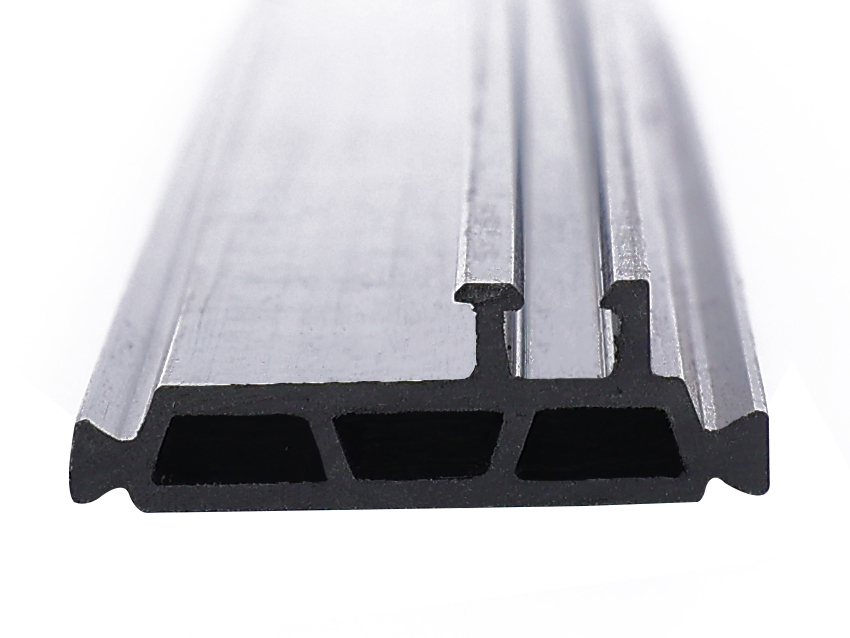
Thermal barrier strips—typically made from low-conductivity polyamide or similar polymers—are inserted between the inner and outer aluminum sections. This interrupts the conductive path and significantly reduces heat transfer. By replacing a metal-to-metal connection with a metal-to-polymer-to-metal interface, the system’s overall thermal resistance increases, lowering U-values and improving compliance with modern energy codes.
2. Improving Energy Efficiency and Reducing HVAC Loads
Because unbroken aluminum frames allow large amounts of heat to move freely, buildings with these systems often experience high heating and cooling demands. In cold climates, indoor heat is rapidly lost through frames; in hot climates, solar and ambient heat is conducted inward. Both conditions increase the load on HVAC systems.
Thermal barrier strips address this by stabilizing the temperature at the interior surface of the frame. With reduced heat flow, the indoor environment stays closer to the desired setpoint for longer periods. This results in:
Lower energy consumption for heating and cooling
Reduced peak loads on HVAC equipment
More consistent indoor temperatures throughout the space
Over the life of a building, these energy savings can be substantial, making thermally broken aluminum systems a key component of high-performance and low-energy design strategies.
3. Preventing Condensation and Moisture Problems
Another major thermal problem in aluminum building systems is condensation . When warm, moist indoor air comes into contact with a cold aluminum frame, the surface temperature can drop below the dew point. This causes water vapor to condense on the frame, leading to visible moisture, water stains, and in severe cases, dripping.
Thermal barrier strips help by raising the temperature of the interior frame surface. Because the thermal break reduces the influence of outdoor cold on the inner aluminum profile, the inside surface stays warmer. This greatly lowers the risk of condensation forming. Preventing condensation is critical for several reasons:
It protects finishes and adjacent materials from water damage
It reduces the risk of mold and mildew growth
It helps maintain healthy indoor air quality
In climates with large temperature differences between inside and outside, thermal barrier strips are essential for moisture control in aluminum window and curtain wall systems.
4. Enhancing Occupant Comfort Near Windows and Facades
Thermal problems in aluminum frames also affect human comfort . Even if the air temperature in a room is controlled, cold interior frame surfaces can create discomfort. People sitting near windows may feel cold due to radiant heat loss from their bodies toward the cold frame and glass edges. Similarly, in hot conditions, overheated frames can radiate heat inward.
By reducing heat transfer, thermal barrier strips keep interior frame surfaces closer to room temperature. This improves thermal comfort in perimeter zones, making spaces near windows and curtain walls more usable. In residential buildings, this means fewer drafts and cold spots near doors and windows. In commercial buildings, it allows workstations to be placed closer to the facade without sacrificing comfort.
5. Limiting Thermal Stress and Material Fatigue
Temperature differences across an aluminum frame can also create thermal stress . When the exterior side is exposed to extreme heat or cold and the interior side remains at a different temperature, the metal expands and contracts unevenly. Over time, this cycling can affect seals, gaskets, and connections, potentially reducing airtightness and weather resistance.
Thermal barrier strips help moderate these temperature gradients. By insulating between the inner and outer profiles, they reduce the magnitude of thermal expansion differences across the frame. This leads to:
Better long-term seal performance
Reduced risk of joint movement and material fatigue
Improved durability of the overall assembly
In this way, thermal barrier strips contribute not only to thermal performance but also to the structural and service-life reliability of aluminum building systems.
6. Supporting Compliance With Energy Codes and Sustainability Goals
Modern building regulations and green building standards increasingly require high-performance envelopes with low heat loss and gain. Aluminum frames without thermal breaks struggle to meet these requirements. Thermal barrier strips make it possible for aluminum systems to achieve competitive U-values and meet energy efficiency targets.
By solving the primary thermal problems of conduction, condensation, and surface temperature imbalance, thermal barrier strips enable designers and engineers to use aluminum while still complying with energy codes and supporting sustainability goals. They are a key technology in the development of energy-efficient windows, doors, and curtain wall systems.
Thermal barrier strips solve the core thermal problems inherent in aluminum building systems: excessive heat transfer, high energy loss, condensation risk, occupant discomfort, and thermal stress. By interrupting the conductive path through the frame, they transform aluminum from a thermal liability into a viable component of high-performance building envelopes. In modern architecture, where energy efficiency, comfort, and durability are all critical, thermal barrier strips are not an optional upgrade—they are a fundamental engineering solution to aluminum’s primary thermal challenges.