


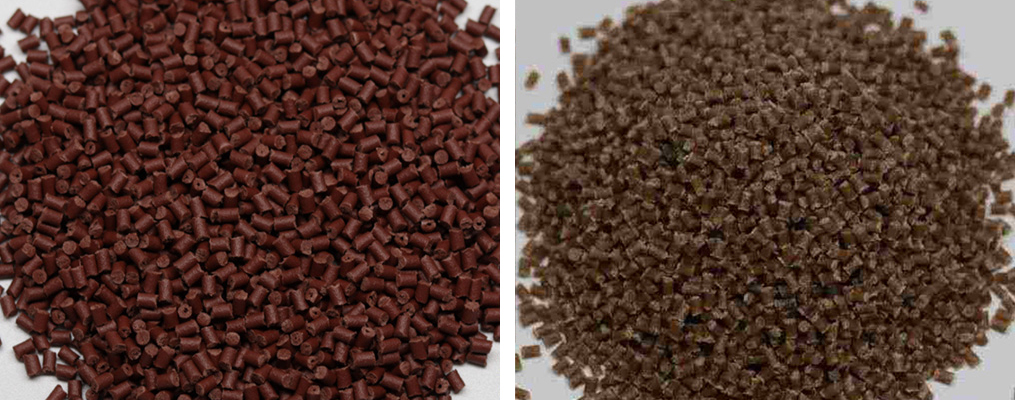
Polyamide particles, commonly processed as PA6 or PA66 engineering granules, play a critical role in modern thermal insulation systems and structural components. Their unique balance of mechanical strength, thermal resistance, dimensional stability, and processability makes them indispensable in applications where both insulation performance and structural reliability are required. Unlike commodity plastics, polyamide materials are engineered to perform under mechanical load, temperature variation, and long-term environmental exposure.
Polyamide Particles as a Foundation for Thermal Insulation Components
One of the primary functions of polyamide particles is serving as the raw material for thermally insulating components, particularly in aluminum window, door, and curtain wall systems. When aluminum frames are used without insulation, they create thermal bridges due to their high conductivity. Polyamide-based components—such as thermal break strips and insulating connectors—interrupt this conductive path.
Polyamide has relatively low thermal conductivity compared to metals. When reinforced with glass fiber, it maintains its insulating capability while gaining the stiffness necessary to act as a structural separator between metal profiles. This dual functionality allows buildings to achieve improved energy performance without sacrificing structural stability.
In thermal insulation applications, polyamide particles contribute to:
Reduced heat transfer across assemblies
Improved interior surface temperatures
Lower condensation risk
Enhanced compliance with energy-efficiency standards
Because polyamide can be precisely extruded or injection molded, insulation components produced from these particles maintain tight dimensional tolerances, ensuring consistent thermal gaps and reliable long-term performance.
Contribution to Structural Integrity
Beyond insulation, polyamide particles are essential in manufacturing structural components that must withstand mechanical stress. When reinforced with glass fibers (e.g., 25% or 30%), polyamide exhibits high tensile strength, flexural rigidity, and impact resistance. This makes it suitable for load-bearing connectors, brackets, housings, and composite interfaces.
In structural systems, material stability is critical. Polyamide offers:
High strength-to-weight ratio
Resistance to creep under sustained load
Good fatigue resistance
Compatibility with metal assemblies
In aluminum building systems, polyamide structural connectors must support wind loads, glass weight, and dynamic forces without deformation. The similar coefficient of thermal expansion between polyamide and aluminum further reduces internal stress during temperature fluctuations, helping prevent joint failure or cracking over time.
Thermal and Mechanical Performance Comparison
The effectiveness of polyamide particles becomes clearer when compared to alternative materials commonly used in insulation or structural roles.
| Property | Polyamide (PA66 GF25) | Aluminum | PVC |
| Thermal Conductivity | Low | Very High | Low |
| Mechanical Strength | High | Very High | Moderate |
| Dimensional Stability | Excellent | Excellent | Moderate |
| Heat Resistance | High | Very High | Limited |
| Load-Bearing Capacity | Strong | Very Strong | Limited |
| Moisture Resistance | Good | Excellent | Moderate |
This comparison highlights why polyamide occupies a unique position: it provides significantly better structural performance than most insulating plastics while maintaining low thermal conductivity compared to metals.
Stability Under Environmental Stress
Thermal insulation and structural components must operate in fluctuating environmental conditions. Exterior building systems are exposed to temperature cycling, UV radiation, humidity, and mechanical vibration. Polyamide particles are engineered to perform reliably in these conditions.
Glass-fiber reinforcement enhances stiffness and reduces thermal deformation. Additionally, properly formulated polyamide grades exhibit resistance to moisture absorption and hydrolysis, preserving mechanical properties over time. This long-term durability is especially important in facade systems, transportation components, and industrial assemblies where maintenance access may be limited.
Processability and Design Flexibility
Another important role of polyamide particles lies in manufacturing efficiency and design flexibility. These particles can be processed through injection molding, extrusion, and compounding, enabling the production of complex geometries with high precision.
For insulation components such as thermal breaks, consistent extrusion quality ensures uniform density and reliable mechanical interlocking with aluminum profiles. For structural applications, injection molding allows integration of reinforcement ribs, locking features, and customized shapes.
This flexibility supports innovation in lightweight composite systems. Engineers can optimize geometry and fiber content to achieve the required balance between insulation performance and structural capacity.
Supporting Energy-Efficient Building Systems
As global building standards increasingly emphasize sustainability, polyamide particles have become essential in enabling energy-efficient architectural systems. Insulated aluminum windows and curtain walls rely on polyamide-based thermal barriers to meet stringent U-value requirements.
Without polyamide components, aluminum would struggle to meet modern energy codes due to its high conductivity. By integrating polyamide insulation elements, designers can retain aluminum’s structural advantages while significantly improving thermal efficiency.
The result is:
Reduced operational energy consumption
Lower carbon emissions over the building lifecycle
Improved building envelope durability
Integration in Multi-Material Systems
Polyamide particles also serve as a critical interface material in hybrid structures. In assemblies combining metal, glass, and composite materials, polyamide components act as connectors that balance thermal separation with mechanical continuity.
Their compatibility with adhesives, sealants, and mechanical fastening systems allows them to function effectively within complex assemblies. This integration capability expands their application beyond building systems into automotive, electronics, and industrial equipment.
Polyamide particles play a dual and highly strategic role in modern engineering: they enable thermal insulation while simultaneously supporting structural performance. Their low thermal conductivity makes them ideal for interrupting heat transfer, while their mechanical strength—especially when glass-fiber reinforced—allows them to function as load-bearing elements.
By combining insulation efficiency, structural integrity, environmental durability, and manufacturing versatility, polyamide particles form the backbone of many advanced insulation and structural components. In high-performance building systems and industrial applications alike, they provide a balanced material solution where both energy control and mechanical reliability are essential.